
 English


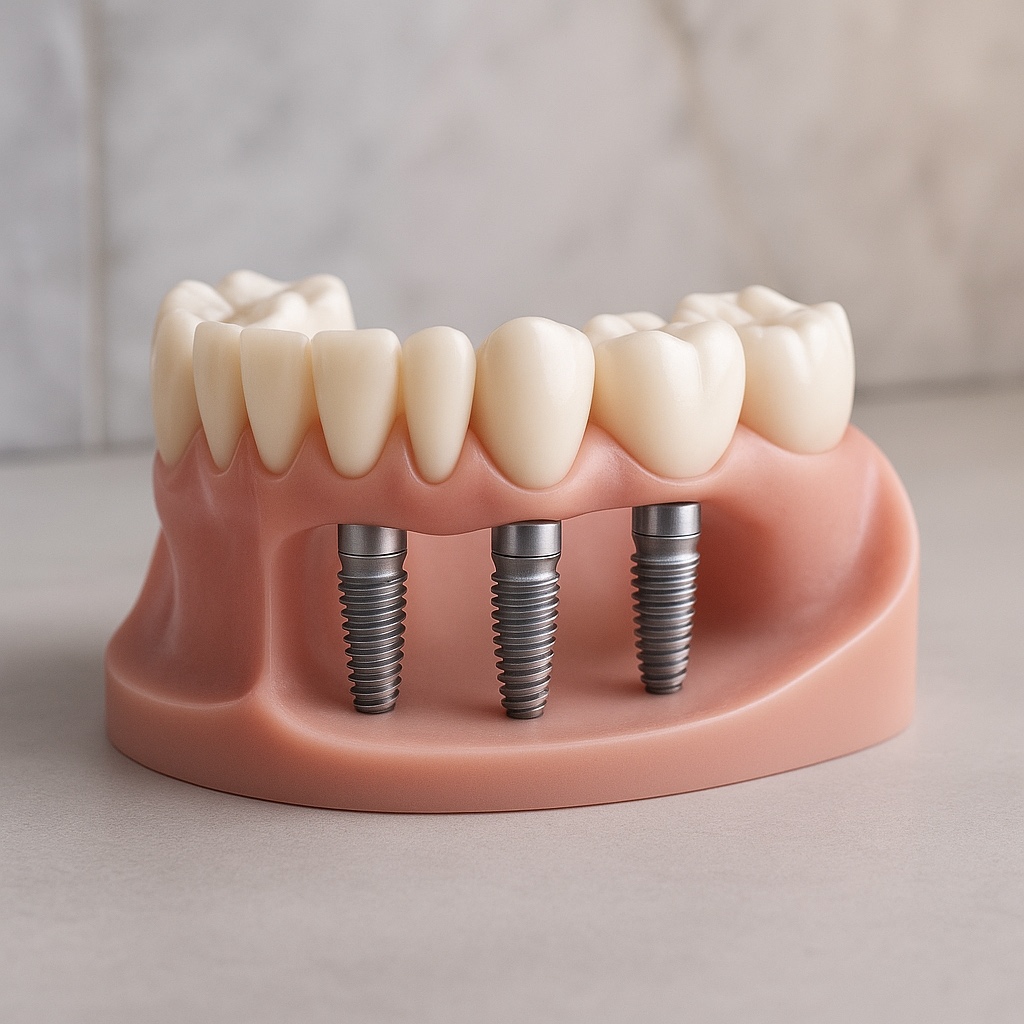
What Is a Dental Implant?
A strong, long-term replacement designed to feel close to a natural tooth.
Dental implants are biocompatible artificial roots placed in the jawbone to restore the function and appearance of missing teeth. Implant treatment involves aesthetic, functional and biological considerations, as well as the replacement tooth itself.
Missing teeth can affect speech, chewing and confidence. Chewing difficulties associated with tooth loss may also interfere with diet and, over time, contribute to nutritional or digestive difficulties.
Dental implants replace missing tooth roots and support replacement teeth, helping restore chewing function. They stimulate the surrounding jawbone and can help maintain bone volume and facial support.
How Is Implant Treatment Planned?
Implant treatment is individualised. The initial assessment considers the condition of the mouth, gum health and available bone. Panoramic X-rays or three-dimensional imaging may be used when needed to assess the anatomy in more detail.
Planning considers oral hygiene, medical history and the individual’s ability to heal and follow aftercare instructions. If bone volume is insufficient, additional procedures such as bone grafting or a sinus lift may be considered.
Smoking, diabetes and uncontrolled periodontal disease can affect the success of implant treatment. Existing oral health problems should therefore be assessed and managed before implants are placed.
What Does the Procedure Involve?
Implant surgery requires careful planning and precise technique. The clinician prepares a site in the jawbone and places the titanium implant. A healing period then allows the implant to integrate with the bone.
During healing, the implant integrates with the bone in a process called osseointegration. Depending on the individual case, this may take from 6 weeks to 6 months. Once integration is sufficient, an abutment and a dental crown are fitted to complete the restoration.
In selected cases, a temporary crown may be fitted at the same visit to provide a temporary functional and aesthetic solution.
What If There Is Not Enough Bone?
Insufficient bone does not always rule out implant treatment. Additional surgery may be considered after assessment:
Bone grafting: graft material is used to support deficient bone areas.
Sinus lift: adding graft material beneath the sinus floor to increase bone height in the upper jaw.
Ridge augmentation: increasing bone volume where the jaw ridge is too narrow.
Zygomatic implants: long implants anchored in the cheekbone for selected cases of severe bone loss.
All-on-4: a full-arch restoration supported by four implants; suitability depends on bone anatomy and clinical assessment.
What Are the Advantages of Dental Implants?
Natural appearance and feel:
Implant restorations aim to combine strength with a natural appearance.
Long-term use:
With appropriate care, implants may remain functional for many years; longevity varies by patient and restoration.
Supports bone preservation:
Implants stimulate the surrounding jawbone and can help maintain bone volume.
Helps prevent neighbouring teeth from drifting:
Missing teeth may allow neighbouring teeth to drift. Replacing them can help maintain alignment.
Helps support facial contours:
Implants support the replacement teeth and may help maintain facial contours.
Helps improve chewing and speech:
Implants can help restore chewing function and clearer speech.
The R&B Clinic Approach
Successful implant care depends on appropriate planning, a sterile surgical environment, experienced clinicians and individualised treatment. At R&B Clinic, we aim to provide aesthetic and functional options based on scientific principles, with clear information throughout your treatment.