
 English


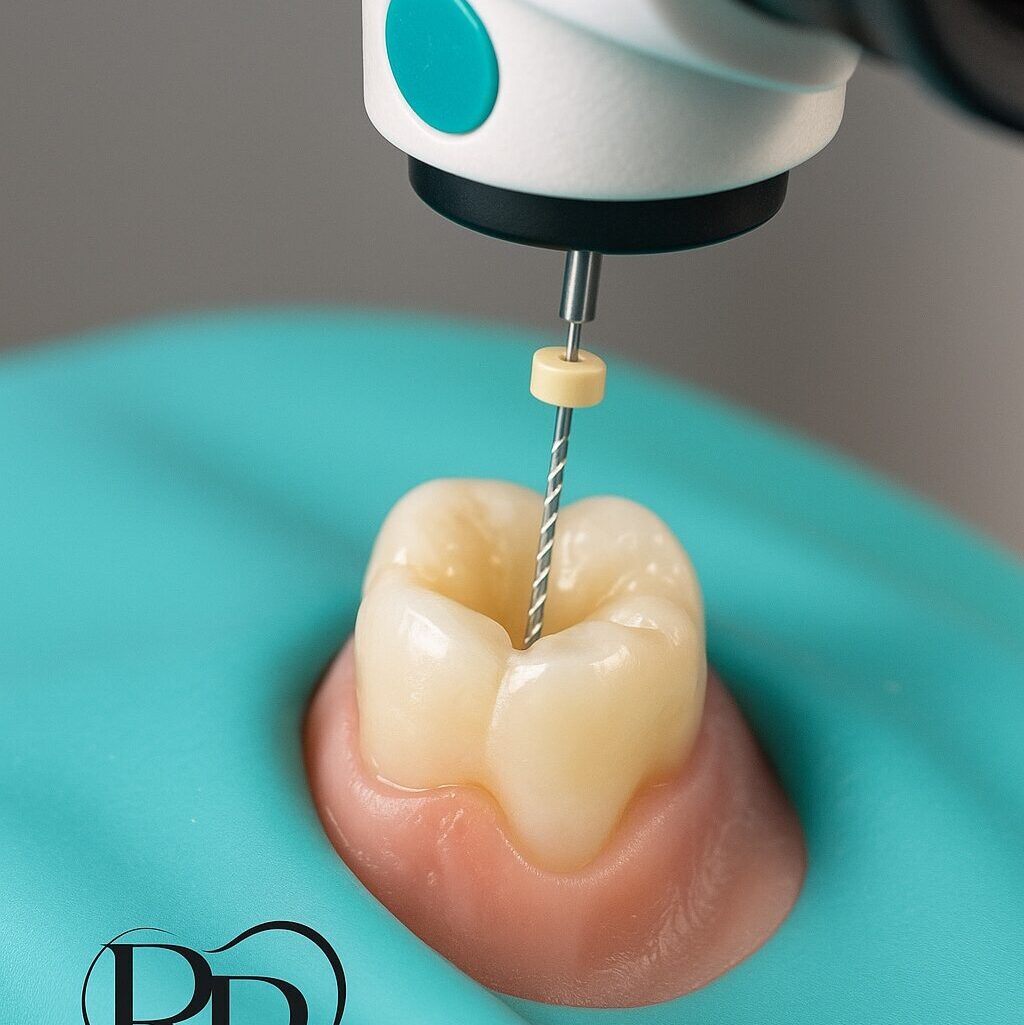
Root Canal Treatment (Endodontics)
Root canal treatment aims to preserve a tooth when the pulp, the soft tissue containing nerves and blood vessels inside it, becomes infected or severely inflamed. Deep decay, trauma or prolonged inflammation may damage the pulp. The aim is to save the tooth rather than extract it.
Modern techniques and biocompatible materials allow many infections around the root tip to be treated successfully, helping preserve the tooth in the mouth.
When Is Root Canal Treatment Needed?
Deep tooth decay
Injury or fracture
Pulp damage associated with gum disease
Retreatment of a previous unsuccessful root canal treatment
Tooth discolouration, sensitivity to hot or cold, or pain when chewing
Root-tip infection or an abscess visible on an X-ray
How Is Treatment Performed?
Treatment begins with clinical and radiographic assessment. Under local anaesthesia, inflamed or damaged pulp tissue is removed, the canals are cleaned and shaped, and a root filling is placed to seal them and reduce the risk of reinfection.
How Long Does Treatment Take?
Vital teeth: treatment can often be completed in one visit.
Infected teeth: several visits over 1–2 weeks may be needed.
Will Treatment Hurt?
Local anaesthesia is used to keep the procedure comfortable. Temporary mild sensitivity or tenderness when biting may occur for a few days afterwards. Contact your dentist if symptoms are severe or do not improve.
How Successful Is Root Canal Treatment?
Root canal treatment performed with appropriate techniques and materials often has a high success rate. A properly treated tooth, protected by a suitable final restoration and ongoing care, may remain functional for many years.
What Is Root Canal Retreatment?
Retreatment involves removing and replacing a previous root filling when earlier root canal treatment has not resolved the problem.
Retreatment may be needed for:
Inadequately filled root canals
Missed root canals
Leakage or damage involving the root filling
Persistent pain or inflammation around the root tip
What Restoration Is Needed After Root Canal Treatment?
After root canal treatment, the tooth needs a suitable final restoration for protection and long-term function. The choice depends on how much healthy tooth structure remains:
Composite fillings
Fibre-post-supported restorations
Porcelain or zirconia crowns
Is Root Canal Treatment Expensive?
Root canal treatment can be a cost-effective way to save a tooth. Compared with replacing a missing tooth with an implant or bridge, it may involve lower costs and a shorter overall treatment period. Most importantly, it aims to preserve your own natural tooth.