
 English


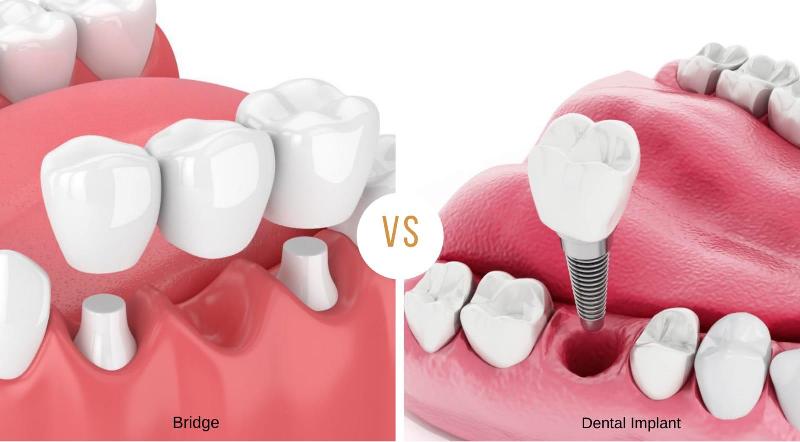
Losing one or more teeth can affect appearance, chewing and speech. Dental implants and bridges are two commonly used options for replacing missing teeth. Which one is more suitable for you?
What Is a Dental Implant?
A dental implant is an artificial tooth root, usually made of titanium, placed in the jawbone to support a replacement tooth. It can provide a fixed restoration with an appearance and feel close to a natural tooth.
Advantages:
Designed to resemble a natural tooth
Helps maintain supporting bone
Designed for long-term function
Usually avoids preparation of adjacent teeth
Disadvantages:
Surgery is required
Healing may take several months
May involve higher costs
What Is a Dental Bridge?
A conventional dental bridge replaces a missing tooth using the adjacent teeth as supports. These supporting teeth are usually prepared for crowns, with an artificial tooth spanning the gap. A bridge may replace one or several missing teeth, depending on the clinical situation.
Advantages:
Can be completed in less time
No surgery is usually required
Often costs less than an implant
Disadvantages:
Adjacent teeth usually need preparation
The gum beneath a bridge may recede over time
A bridge has a finite lifespan, often quoted as 7–10 years, although this varies widely.
Which Option Should You Choose?
Factors to consider when choosing include:
Your overall oral health and jawbone condition
Your aesthetic expectations and long-term plans
Your time and budget
If you have suitable bone and are seeking a fixed, natural-looking replacement, an implant may be an option. If you need a quicker approach and the neighbouring teeth already require crowns, a bridge may be considered. Your dentist can assess the benefits and limitations of each.
Conclusion
Tooth loss can have a significant impact, but suitable treatment can help restore a healthy, attractive smile. A dental examination is the best way to determine which option is right for your situation.